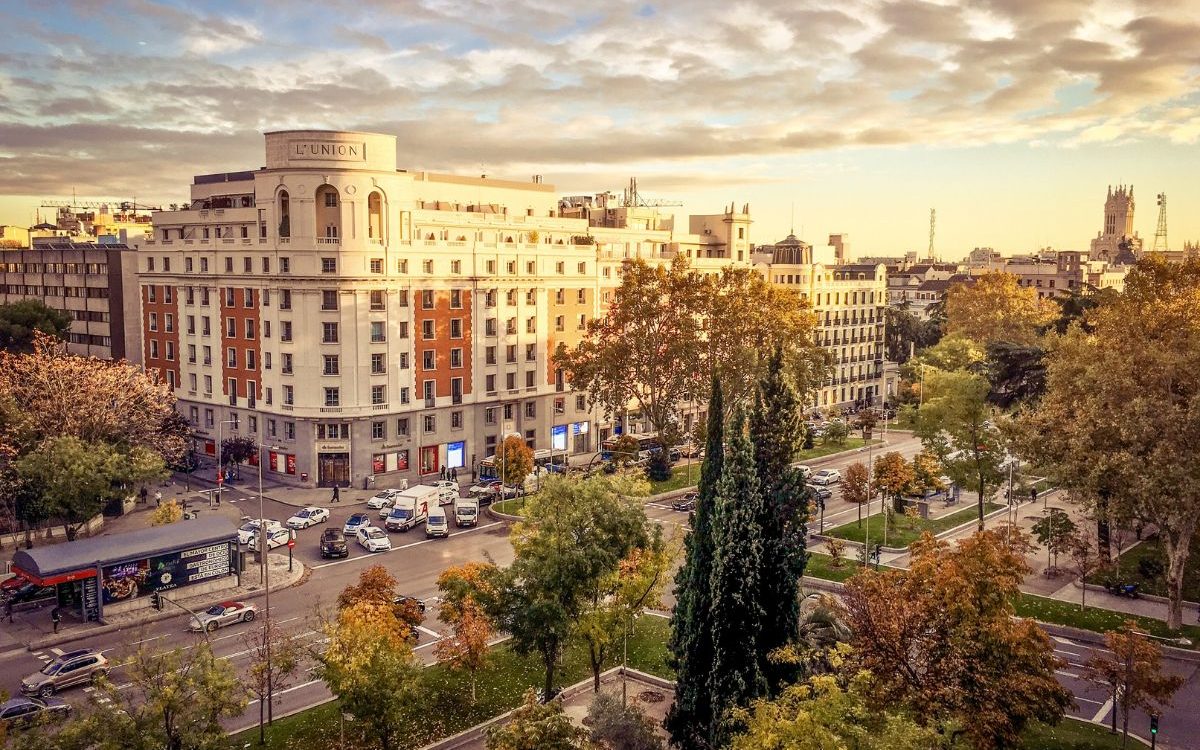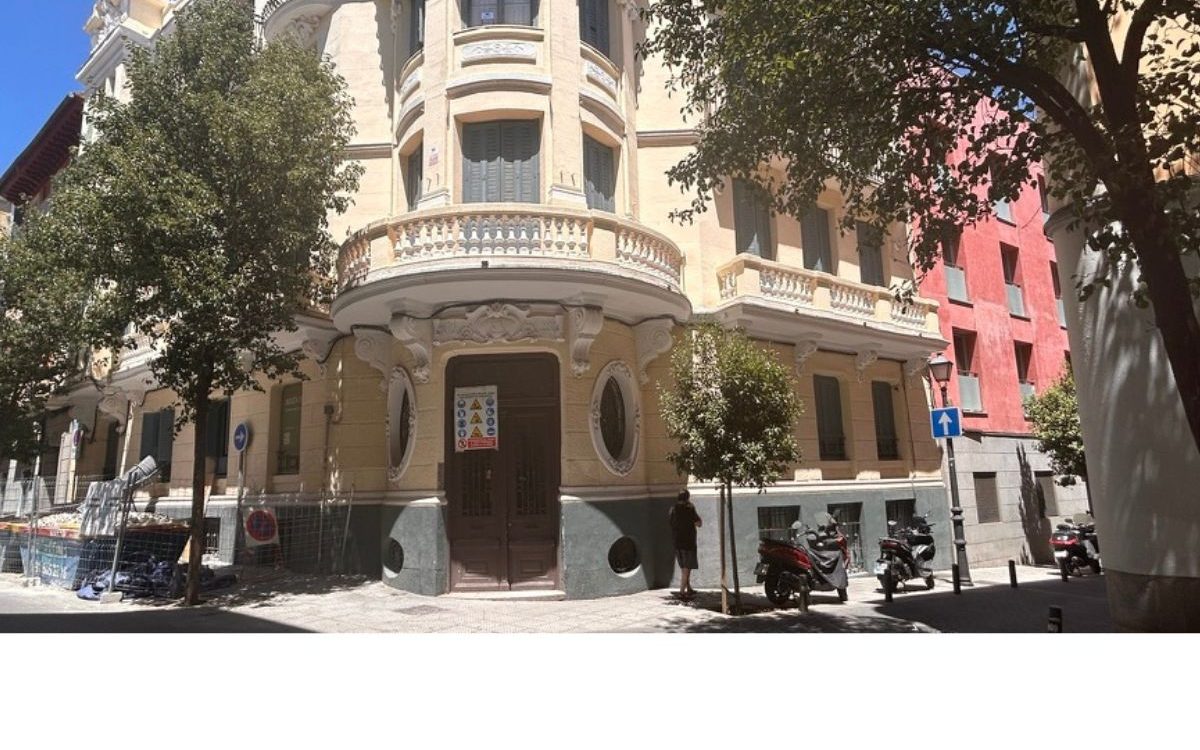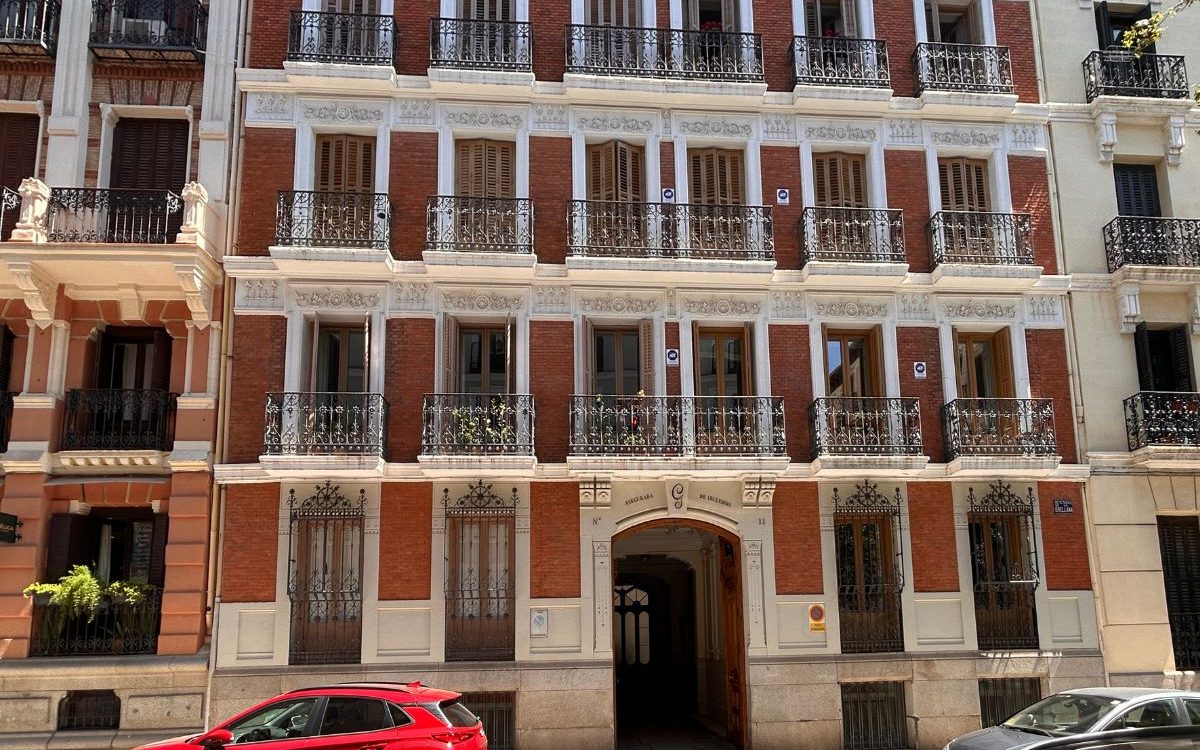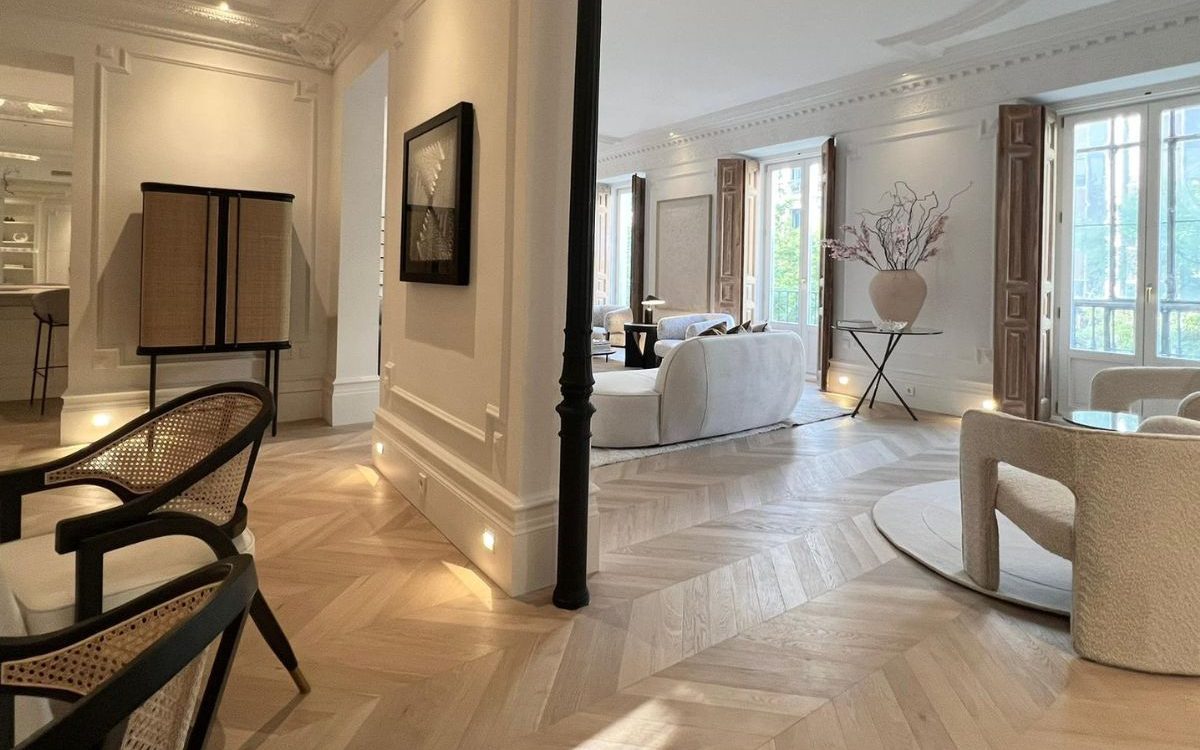

One of the first things that surprises anyone who analyzes the Madrid market in depth is the variety of what can be bought within the same neighborhood, sometimes even on the same street. It's not a market of homogeneous products. It's a market where the building type radically influences the living experience—and, therefore, the value.
Understanding the different types of properties available in Madrid's prime market means understanding what people are really buying. Because two 200-square-meter apartments in the same neighborhood can be completely different assets.
As we explained in the article about How to interpret the real estate map of Madrid, This diversity is not random: it is the result of how the city has been built over a century and a half.
Classic buildings of the expansion (1880–1936)
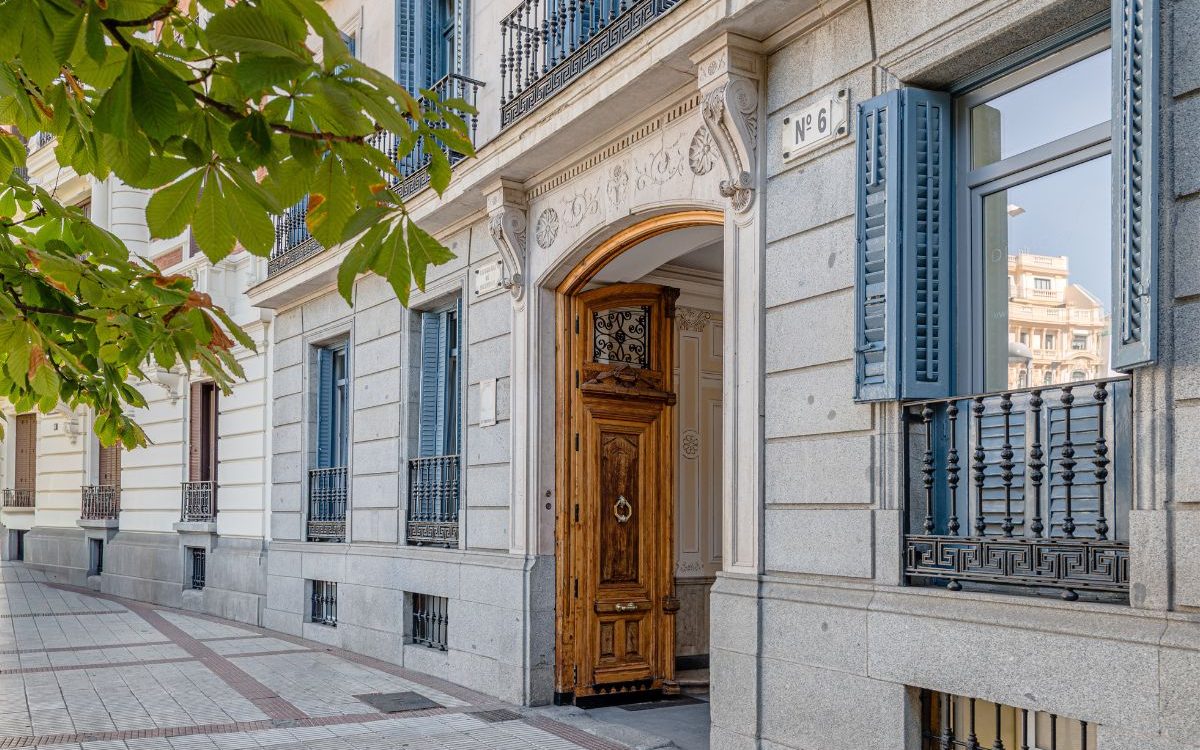
The first major typology is the one that defines the character of the Salamanca neighborhood and much of Almagro: buildings constructed between the end of the 19th century and the first third of the 20th century, during the expansion of the Madrid city center.
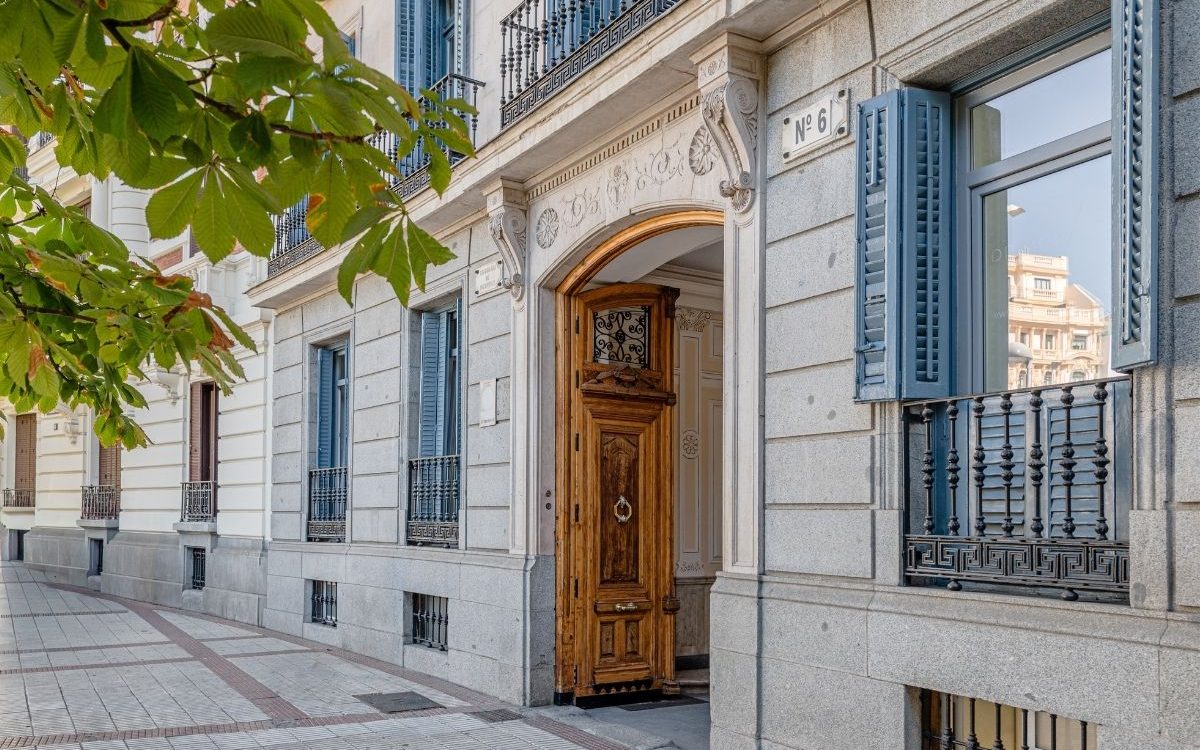
These are buildings with facades of stone or ornamental brick, portals with columns and marble floors, elegant staircases, cage elevators —many exquisitely restored—, ceilings of 3.20 to 3.60 meters, continuous balconies facing the street and, in the best pieces, original moldings, coffered ceilings and solid wood carpentry that have survived for more than a century.
The apartments in these buildings tend to be spacious, but with a caveat that many buyers discover too late: the large entrance halls, grand staircases, and impressive common areas mean that the actual living space can be considerably less than the total built area. The difference varies depending on the building and the area, but it's significant enough to completely change the investment calculation.
This type of property commands the highest prices on the market when it has been properly renovated. Buyers of these properties seek something that cannot be built today: the combination of history, scale, and craftsmanship found only in the finest buildings from over a century ago.
Rationalist buildings (1940–1960)
The second relevant typology consists of buildings constructed in the 1940s and 1950s, many of them designed by architects such as Gutiérrez Soto or Casto Fernández-Shaw. These buildings have more understated lines, with exposed brick or plastered facades, functional yet dignified entrances, and apartments with layouts that prioritize efficiency over ostentation.
Ceilings are usually somewhat lower than in classic properties —2.80 to 3.00 meters— and the common areas are more contained, which translates into a greater proportion of habitable square meters compared to the total built area.
These buildings are found primarily on Goya, Lista, part of Castellana, and some streets in Almagro. They offer a good structural basis for renovations and, in the best cases, ample floor space, but they lack the ornamental architectural value of the buildings in the city's expansion area.
As we explained in the article about The factors that determine the value of a home in Madrid, This difference in architectural character is directly reflected in the price differences within the same neighborhood.
Functional blocks (1960–1980)
The third type is the most problematic from the point of view of value: buildings built between the 1960s and 1980s, without architectural value, with functional entrances, ceilings of 2.50 meters or less, and a construction oriented towards economic efficiency, not residential quality.
These buildings are present in all of Madrid's prime neighborhoods—yes, even in Recoletos and Salamanca. And they represent a common trap for the uninformed buyer: the location is good, the price per square meter may seem attractive, but the living experience is light years away from what a traditional building just three doors down offers.
In our experience, assets in this type of building exhibit very significant negative differentials—on the order of 20 to 35%—compared to similar traditional properties on the same street. And more importantly, this differential tends to widen over time, not narrow.
Contemporary rehabilitations (2000–present)
The fourth type — and the one that has grown the most in the last twenty years — is that of comprehensive renovations: historic buildings whose structure is preserved while the interior is completely transformed according to current standards.
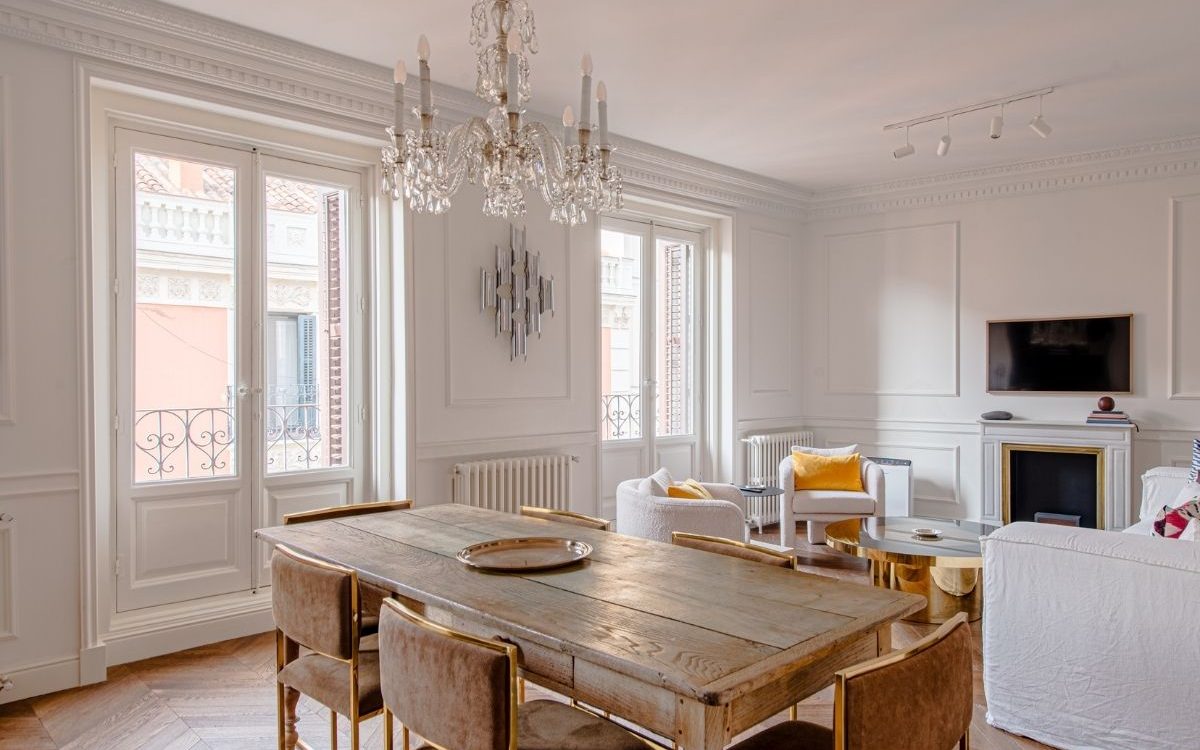
These projects combine the best of both worlds: a classic facade, a restored entrance with original materials, and homes with contemporary layout, aerothermal energy, home automation, state-of-the-art acoustic and thermal insulation, and kitchen and bathroom finishes that compete with any international standard.
In Justicia, this type of property has driven the neighborhood's consolidation within the prime market. In Recoletos and Almagro, the best renovation projects command the highest prices in the market.
As we explained in the article about Where is the most established residential area of Madrid?, These renovations have expanded the perimeter of the prime market by incorporating areas that were not part of it ten years ago.
The typology defines the asset
Buying 200 square meters in a stately 1910 building is not the same as buying one in a 1970 apartment block, even if both are on the same street in the Salamanca district. The building type defines the experience, future demand, appreciation potential, and buyer profile. In Madrid's prime market, understanding what type of building you're buying is just as important as knowing which neighborhood it's in.
Understanding the typologies of prime Madrid buildings is just one aspect of the criteria an international investor needs before entering this market. The complete framework is organized as follows: the four pillars of knowledgeHow the market works, which neighborhoods concentrate the value, what types of properties exist, and how to make a good decision before buying.
Related articles
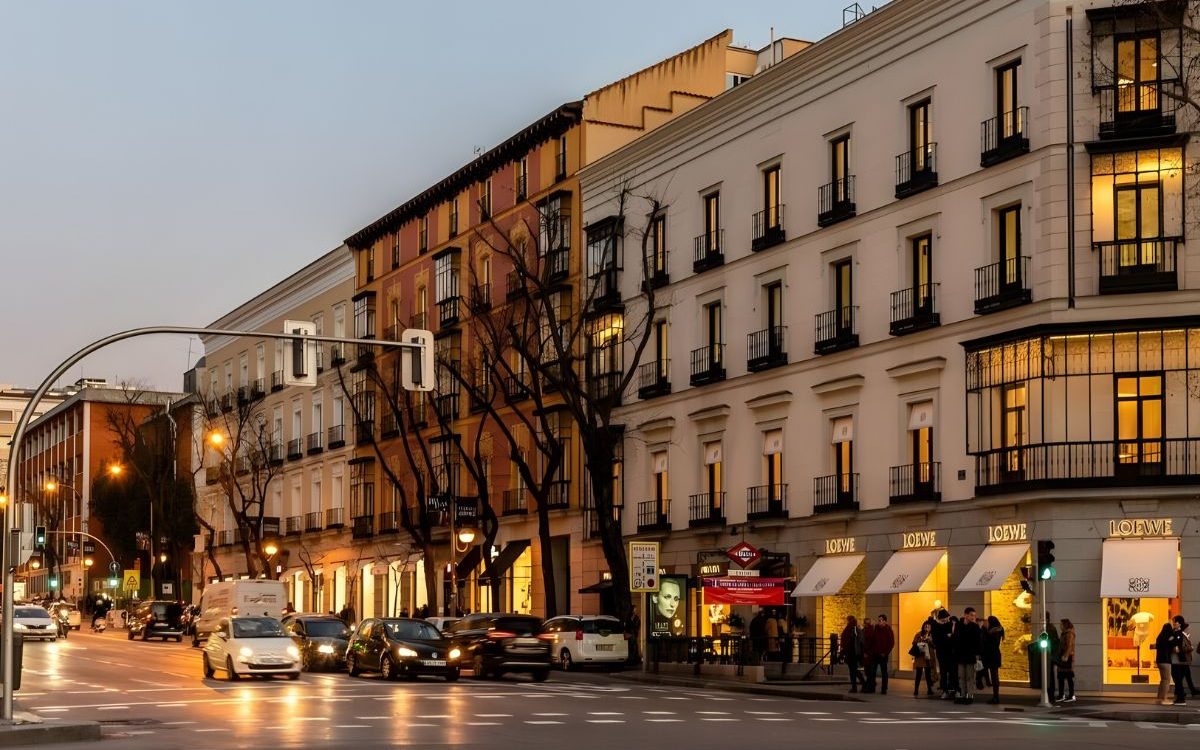
How to interpret the prime Madrid real estate map
Seguir leyendo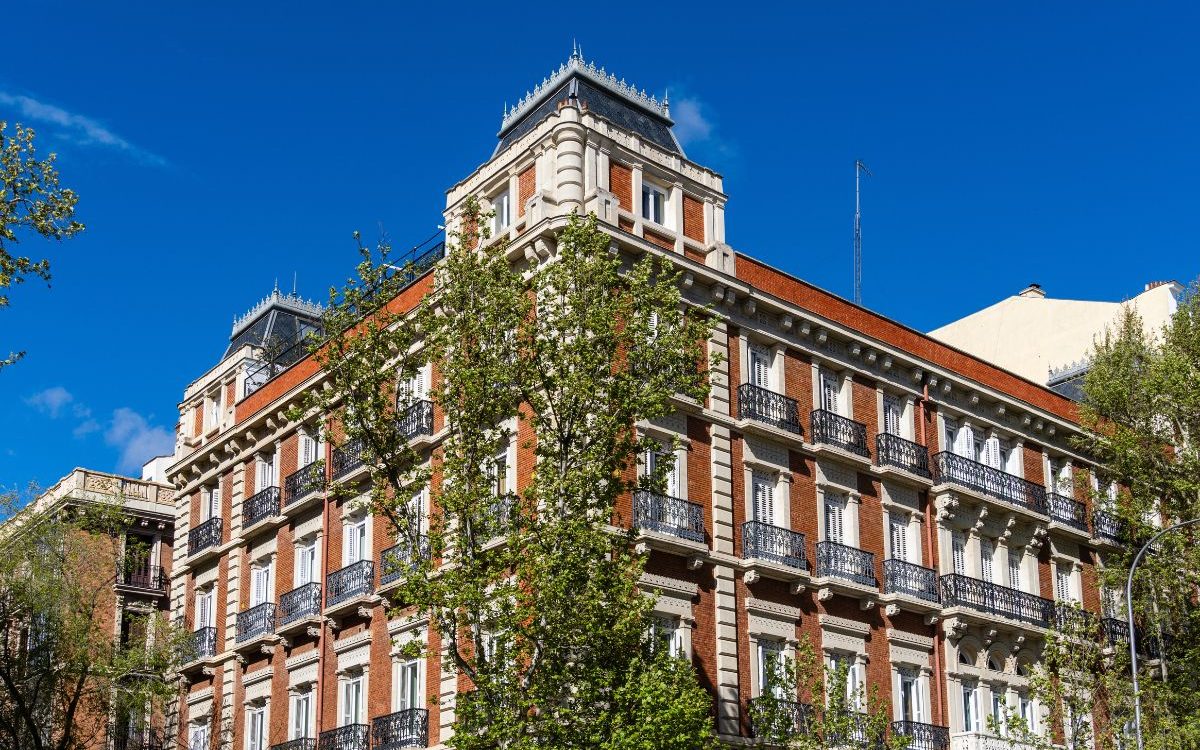
What factors determine the value of a super-prime asset in Madrid
Seguir leyendo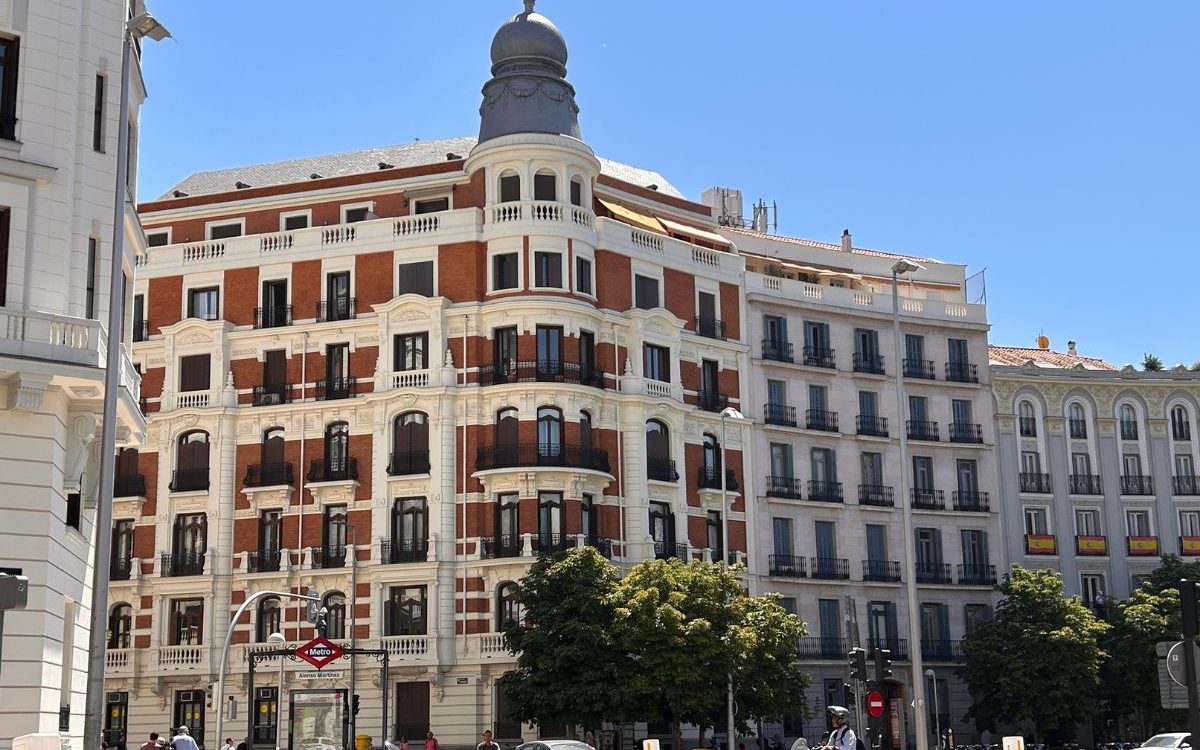
What differentiates neighborhoods like Almagro, Justicia, or Jerónimos in Madrid?
Seguir leyendo