
The different square footage sizes in prime Madrid properties are one of the biggest sources of confusion for international buyers. An apartment is advertised as 200 square meters. You visit it. And the feeling is that it's not actually 200 square meters. The instinctive reaction is to distrust the seller. But the problem is usually not one of bad faith. It's a matter of language: in the Spanish real estate market, 'square meters' can mean very different things depending on who says it and what source they use.
Understanding different surface areas is not a minor technical detail. It's knowledge that can make a difference of hundreds of thousands of euros in the actual valuation of an asset.
Types of prime Madrid housing: the 4 that coexist
Every prime property in Madrid has, simultaneously (and in most cases), four different surface area measurements: cadastral, registered, built, and usable. Each one measures something different, and understanding what each one includes is essential to correctly interpret what you are buying.
The four surfaces that coexist in each home
Every prime property in Madrid has, simultaneously (and in most cases), four different surface area measurements: cadastral, registered, built, and usable. Each one measures something different, and understanding what each one includes is essential to correctly interpret what you are buying.
Cadastral area
It is the one that appears in the Cadastre and the one used by the Tax Office to calculate taxes. It includes the constructed area of the dwelling plus the proportional share of the building's common areas (entrance hall, stairwell, service rooms). It is the most common reference point in the marketing of prime market properties in Madrid.
Registered area
This is the figure that appears in the Property Registry and the deed of sale. In historic buildings, it often doesn't match the cadastral figure: outdated measurements, lack of updates, or a lack of coordination between the Cadastre and the Registry generate discrepancies that can be significant. This isn't a mistake: it's a reality of Madrid's historic building stock.
built area
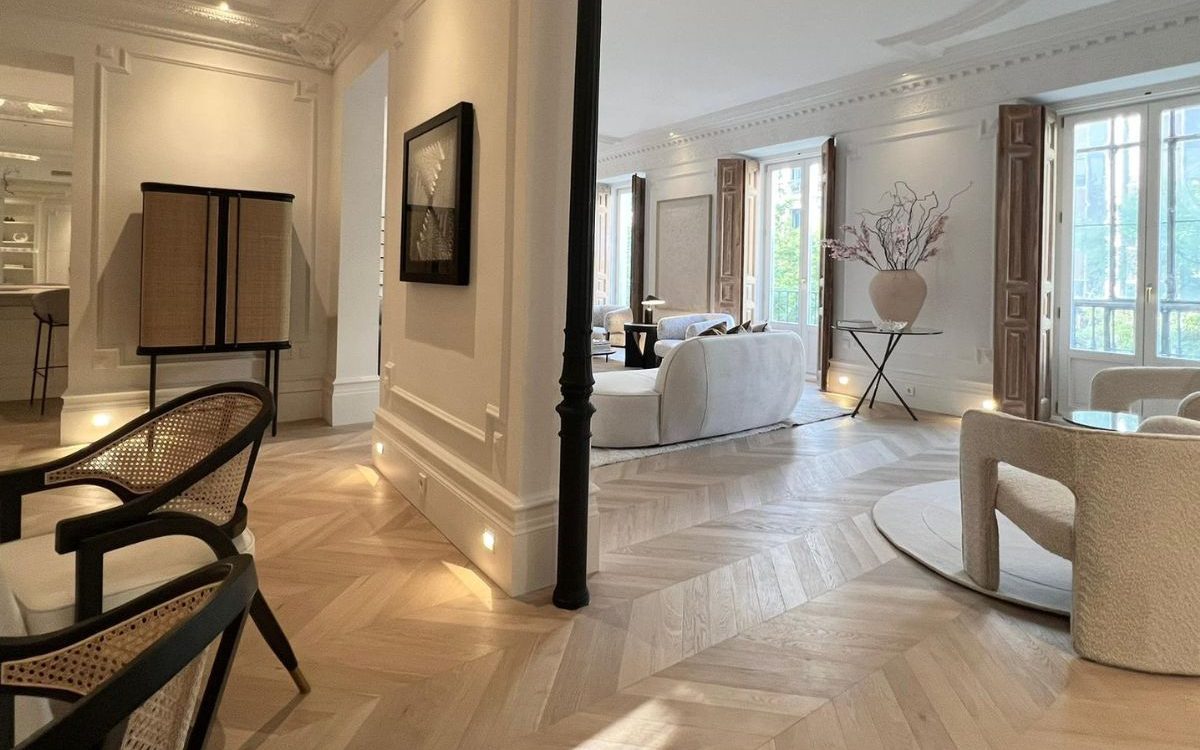
It's the actual interior space that the user can walk on: without walls, without a structure, without common areas. It's the most intuitive reference point for the buyer—but, paradoxically, it's not the one typically used in the market. And it's the basis on which renovation costs are calculated.
The difference that no one anticipates
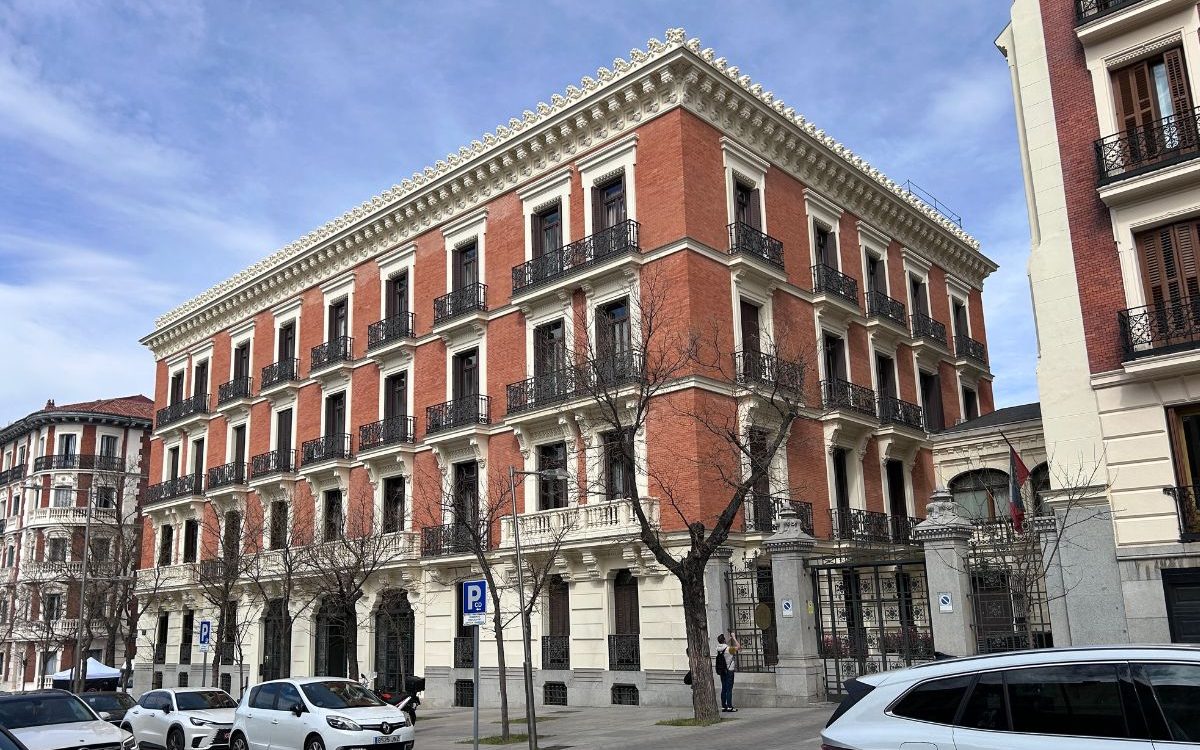
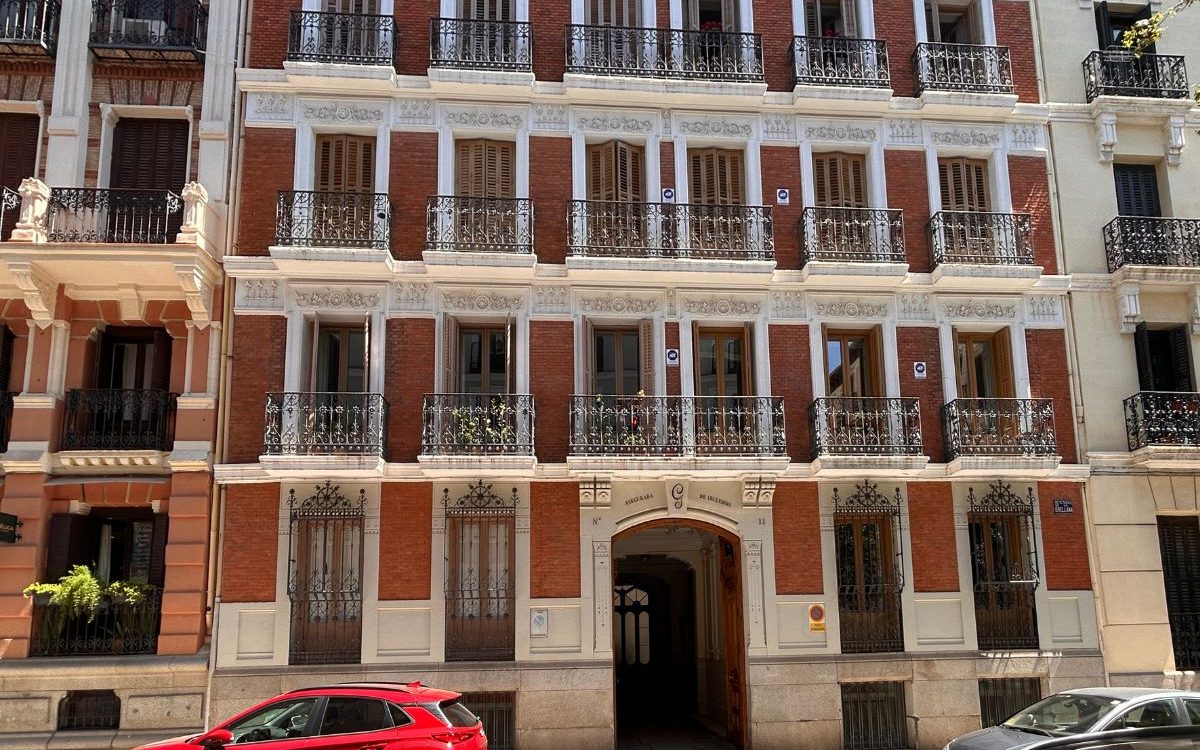
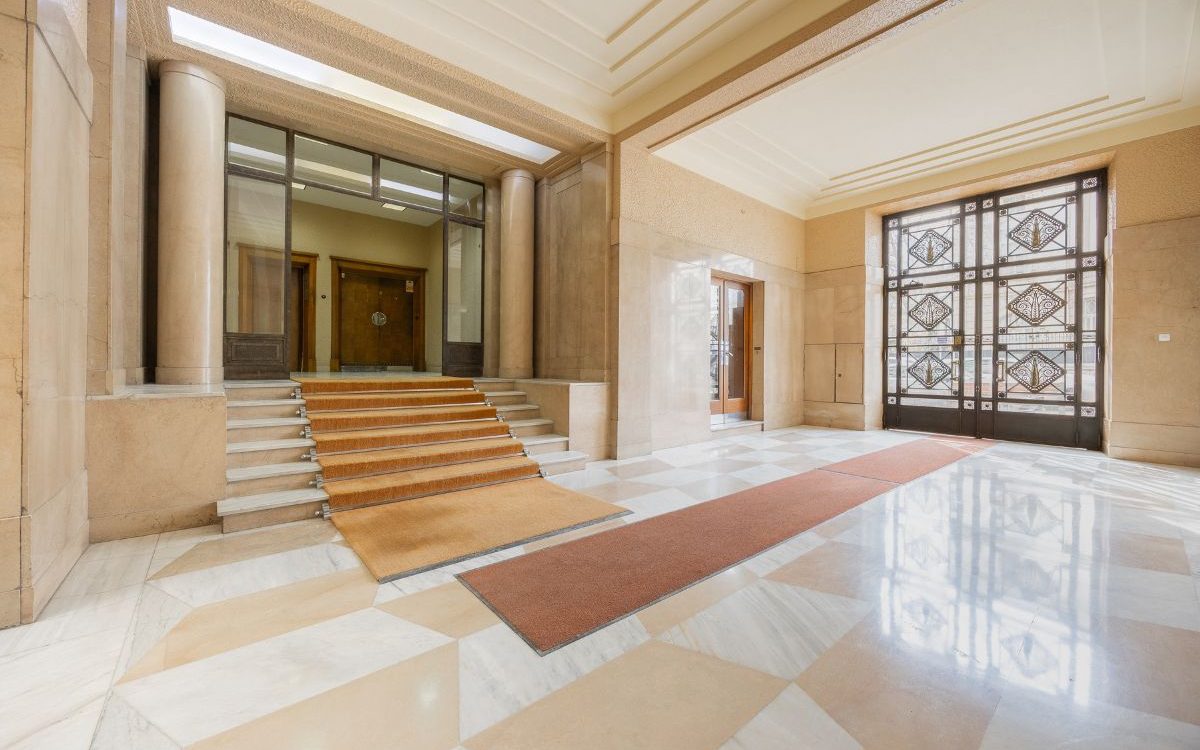
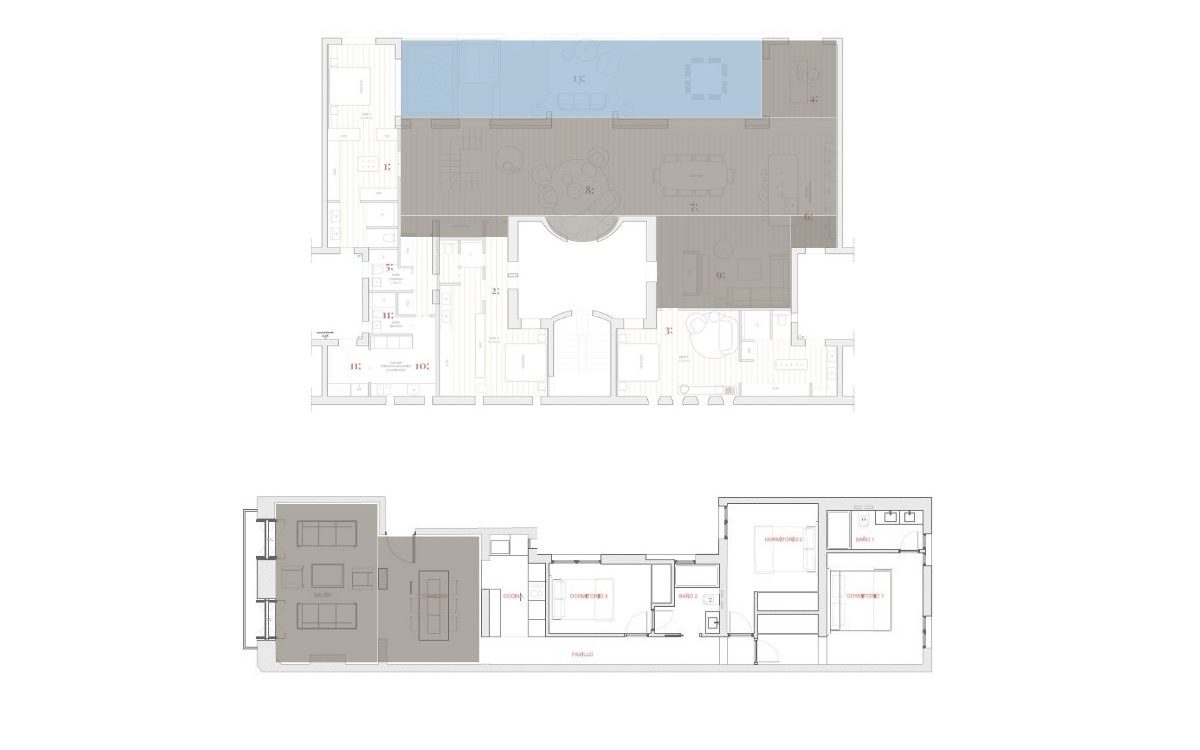
The ratio between built and usable floor area varies enormously depending on the type of building and the neighborhood. In stately homes with spacious entrances, grand staircases, and generous common areas, the actual living space can be considerably less than the built area. In more modern and efficient buildings, the ratio changes.
This has direct practical implications. For a 200 m² apartment, the difference in usable space between a stately building and an efficient one can be fifteen, twenty, or more square meters. At prime market prices—and even more so considering renovation costs per square meter of usable space—that difference can represent a significant amount of money that the buyer hadn't anticipated.
Accurately calculating the actual living space in an apartment requires going beyond the cadastral data or the information on the website. It requires a specific analysis of the building in question—information that, in our experience, very few agents provide and that most buyers discover too late.
The critical field: built area according to the land registry
For any reliable calculation—whether for valuation, renovation costs, or comparing assets—the essential information to request is the constructed area according to the land registry. Not the area listed on the building's website, nor the area provided by the seller, nor the area shown on an unverified plan. The land registry data is the only verifiable information and is the starting point for any serious analysis.
As we explained in the article about What mistakes do international buyers make?, Surface confusion is one of the most frequent and most avoidable errors.
Meters matter, but they're not everything.
In Madrid's prime market, you're not just buying square meters. You're buying a building, a location, a quality of space, a particular proportion of rooms. A smaller apartment in an exceptional building can be worth more—and have better appreciation potential—than a larger apartment in a building lacking character.
Buying is not about acquiring the maximum number of square meters. It's about understanding the asset as a whole.
Understanding the different types of prime Madrid housing is just one aspect of the criteria an international investor needs before entering this market. The complete framework is organized as follows: the four pillars of knowledgeHow the market works, which neighborhoods concentrate the value, what types of properties exist, and how to make a good decision before buying.
Related articles
What mistakes do international buyers make in Madrid's prime market?
Seguir leyendo
Why the price per square meter does not explain the real value of a home in Madrid
Seguir leyendo
What factors determine the value of a super-prime asset in Madrid
Seguir leyendo