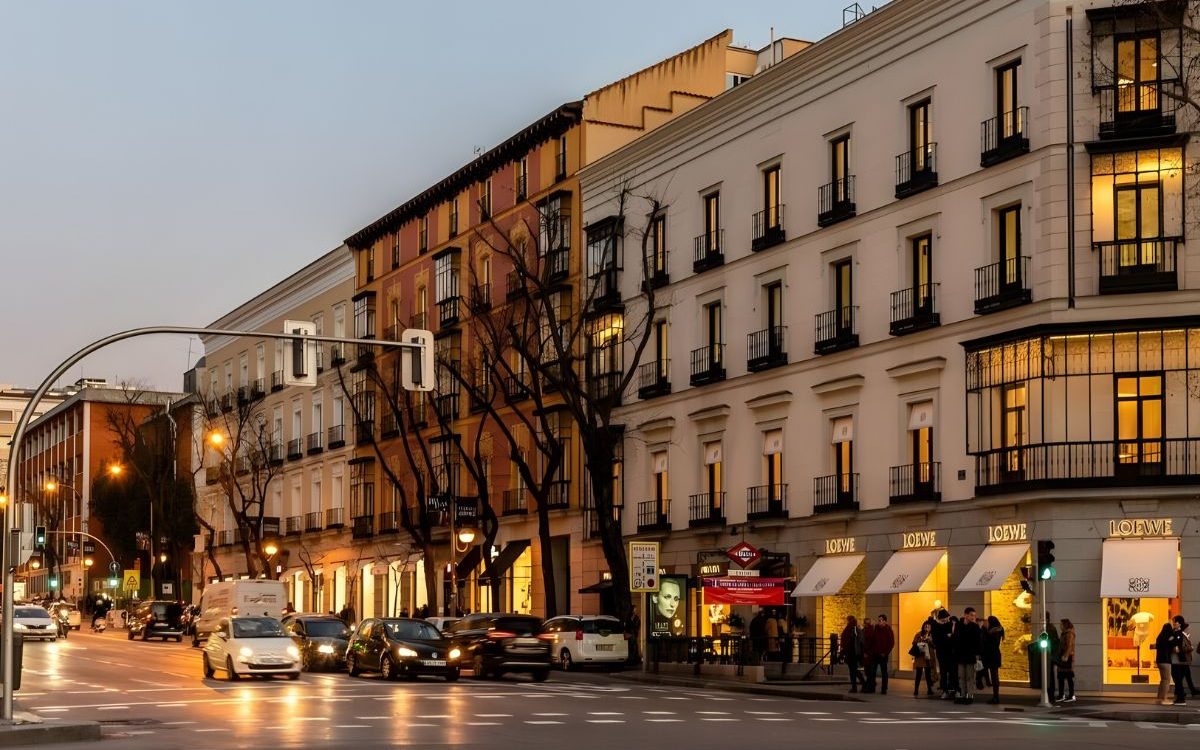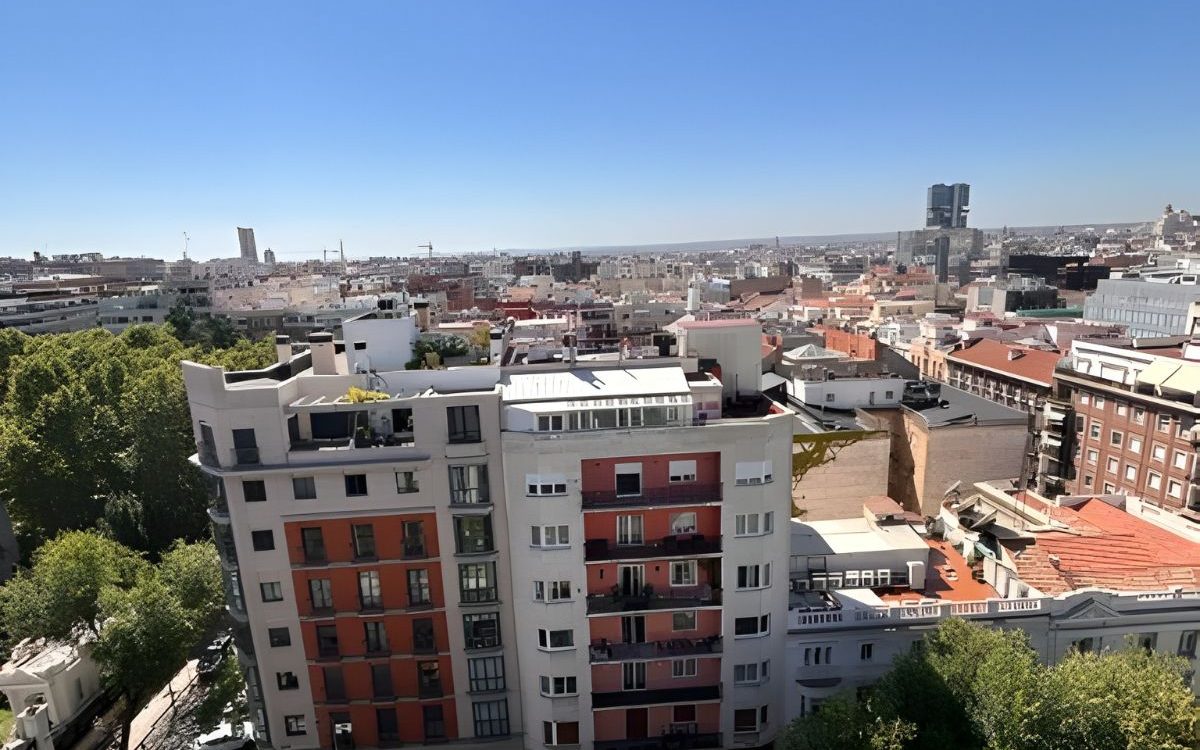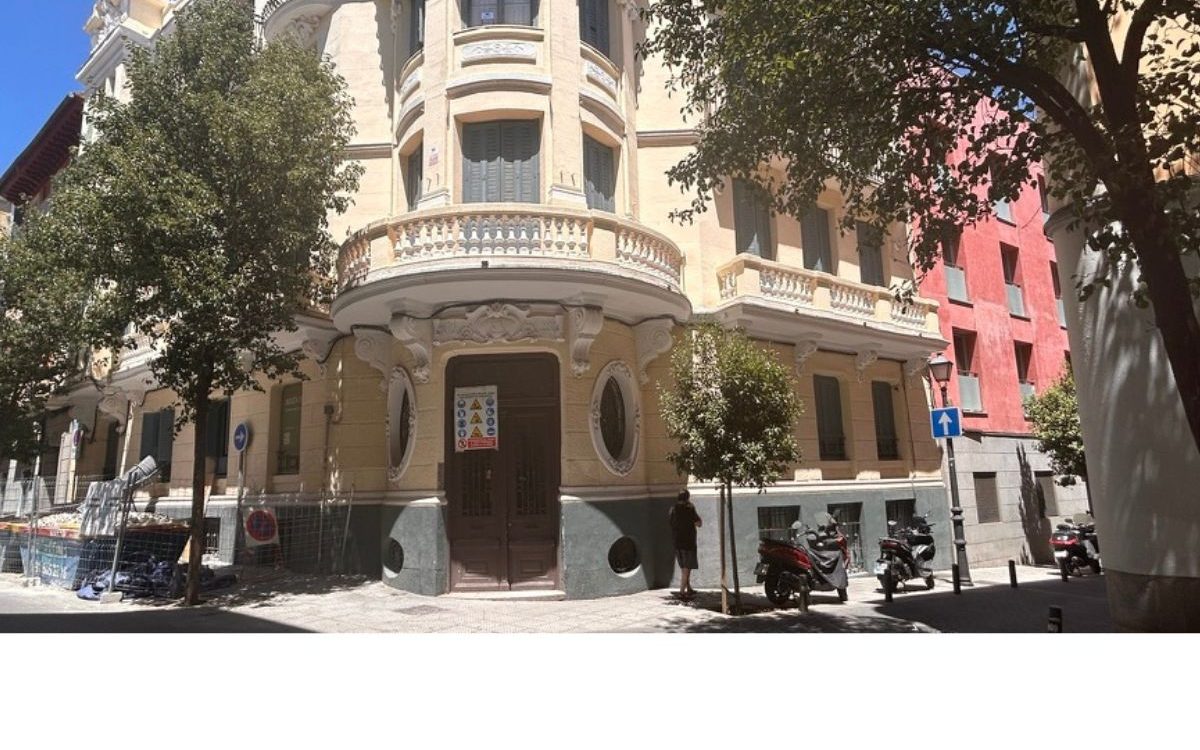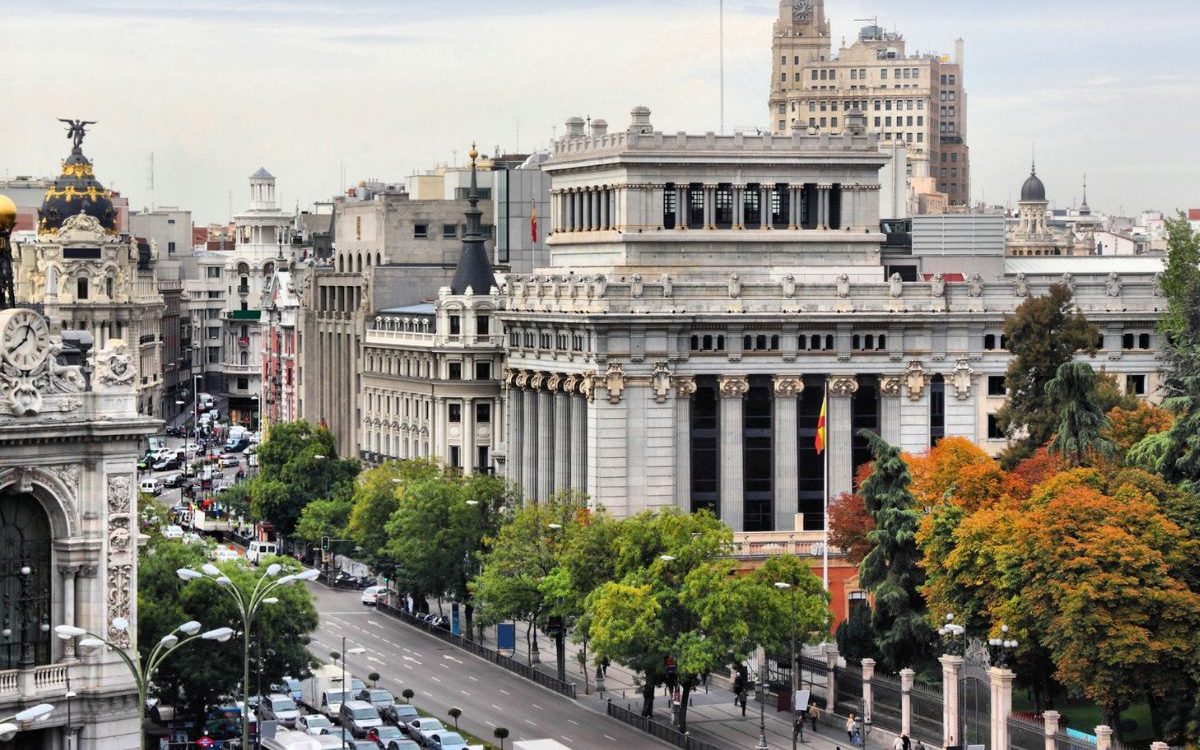
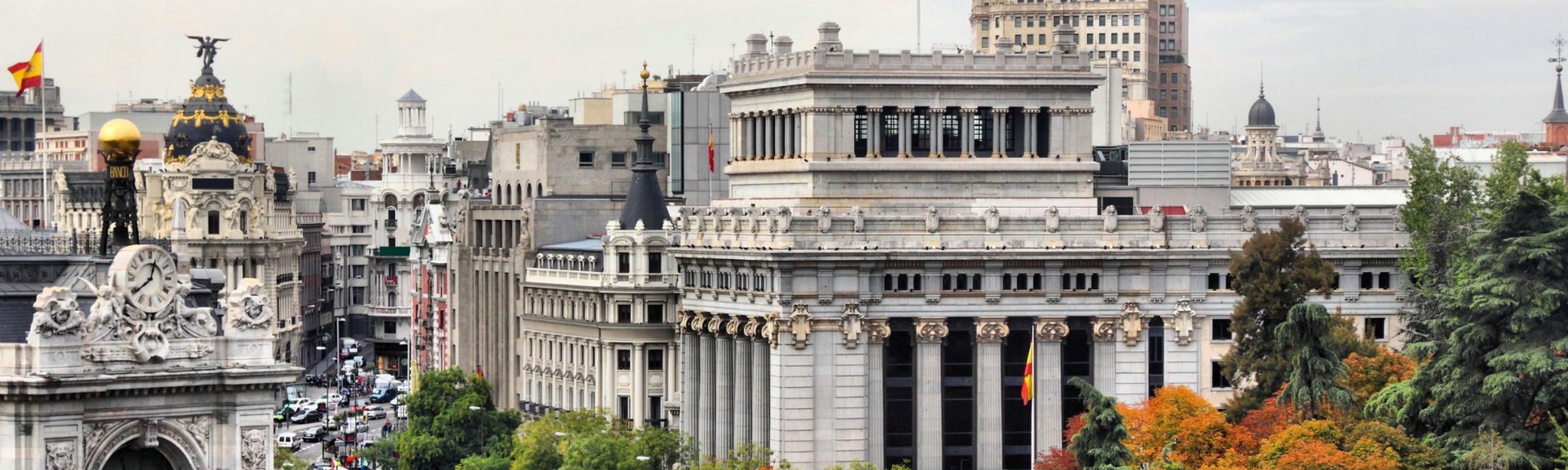
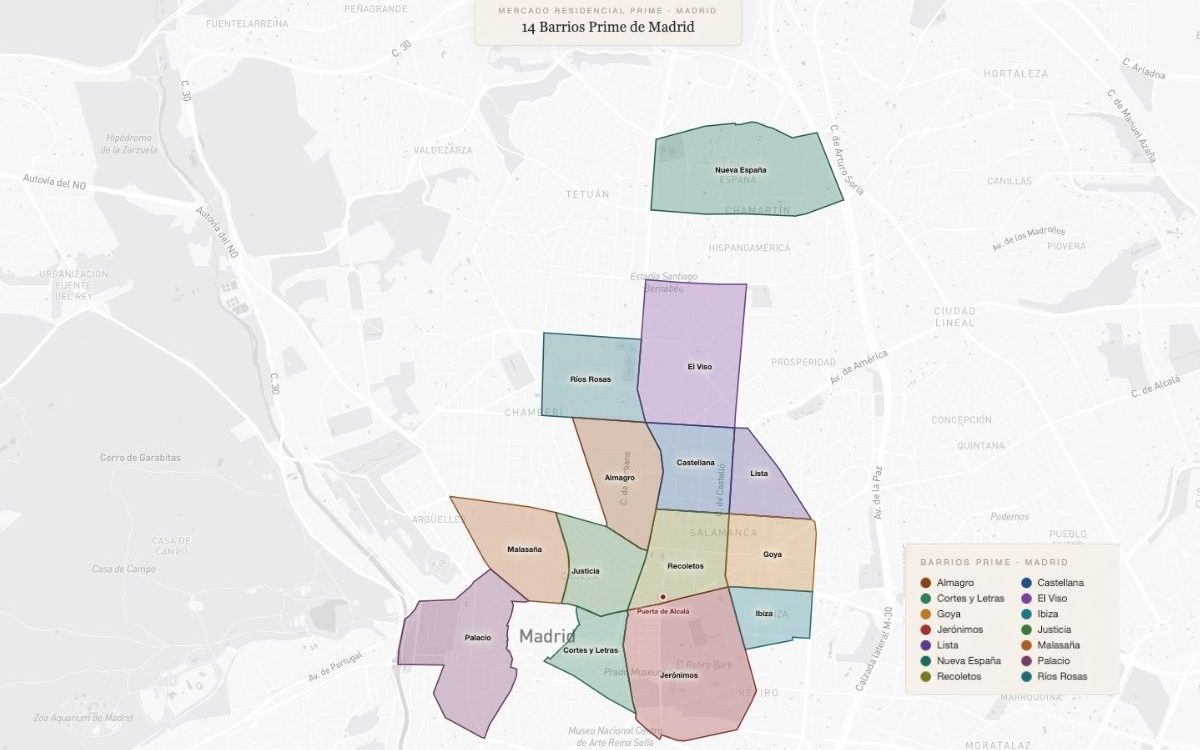
Madrid's prime real estate market: fourteen neighborhoods concentrate virtually the entire high-end residential market of the capital. Fourteen. Not forty, not twenty. A relatively compact area where the rules of the game are different from those of any other European market—and where Madrid's prime real estate prices, depending on the neighborhood, the building, and the condition of the property, can vary to a degree that surprises outsiders: double, sometimes more, between two seemingly comparable apartments. Anyone who understands how Madrid's prime real estate market works knows that this dispersion is not random.
Those who arrive in Madrid from another market often make the same mistake: they try to apply the logic of their home country. They look for square footage, compare prices per unit area, and filter by generic neighborhood. And when they start looking at real properties, they discover that two apartments with the same square footage and the same postal code can have a price difference of 30, 40, or even 50 percent.
This difference isn't arbitrary. It stems from a combination of factors that the Madrid market weighs in a very particular way. Understanding these factors before looking for a home isn't a methodological luxury: it's essential to avoid making a mistake.
The three variables that construct the value
In Madrid's prime real estate market, a property's value is determined by three key, interconnected factors: the neighborhood, the building type, and the property's condition. None of these operate in isolation. Anyone attempting to value an asset by focusing solely on one will obtain a distorted assessment.
The neighborhood: not all 'centers' are the same
Madrid is not a homogeneous market. Almagro offers a completely different residential experience than Justicia, even though they are only a ten-minute walk apart. Jerónimos has a character that is entirely distinct from Malasaña, despite sharing the city center's postal code. Recoletos and Cortes are close to the Retiro Park, but their architecture, urban scale, and buyer profiles are fundamentally different.
Each of these neighborhoods has its own distinct character, which influences the type of housing available, the price range, and the lifestyle it offers. In our experience, many international buyers arrive with the idea that they want to live 'in the heart of Madrid' without having considered what kind of heart they're looking for. That consideration is what separates an efficient search from months of unproductive visits.
As we discussed in the article on How to choose the right neighborhood in Madrid, Each area of the prime market responds to a specific logic that should be understood before taking the first step.
The typology: the building weighs more than it seems
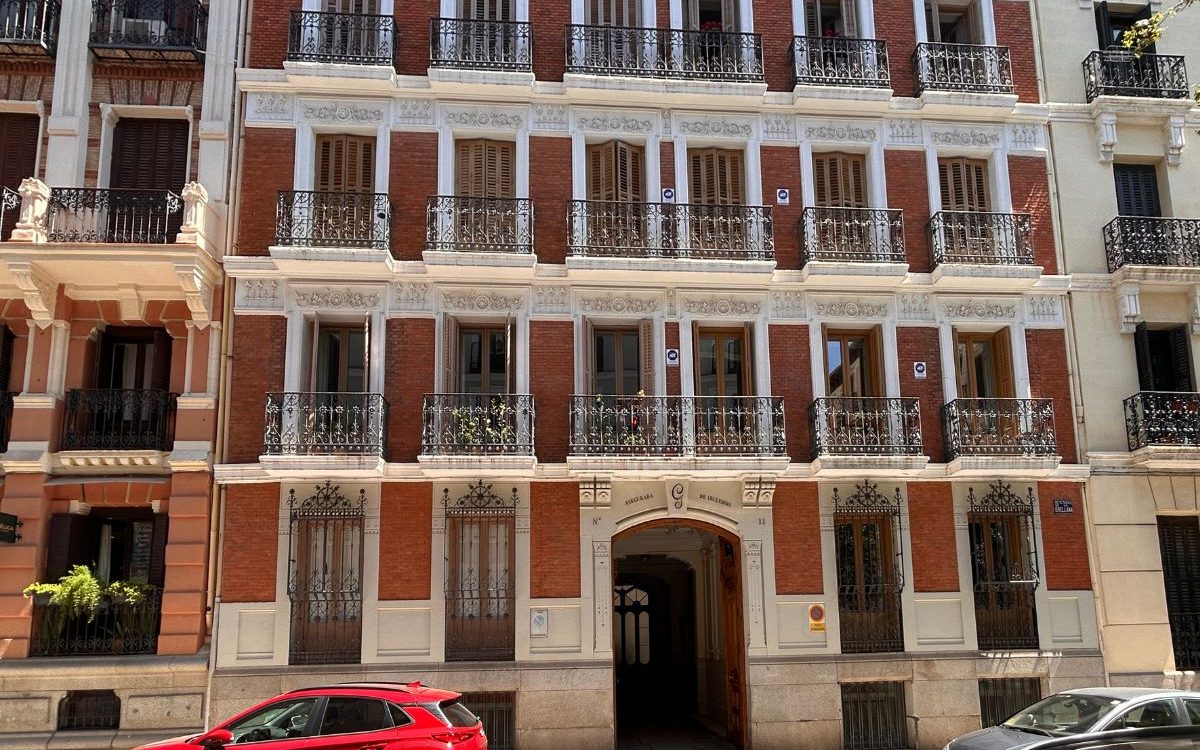
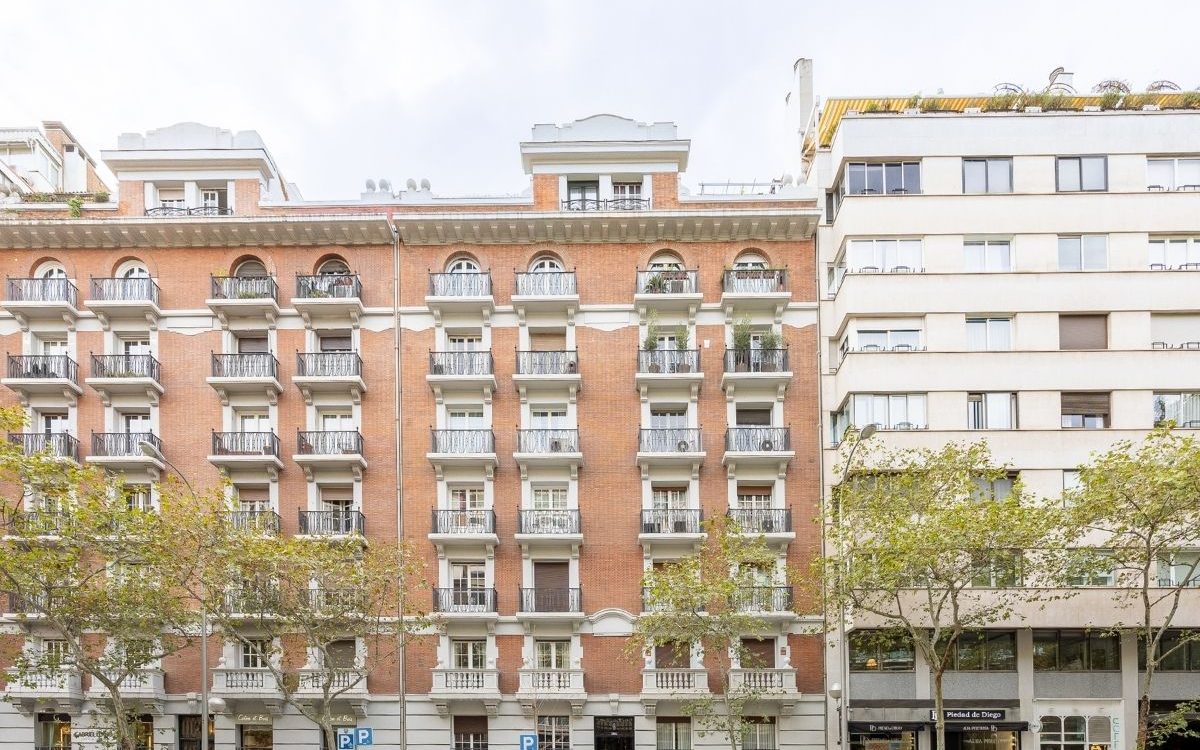
Within the same neighborhood, very different real estate realities coexist. An apartment in a stately 1920s building on Almagro Street, with a marble entrance and a restored cage elevator, has nothing to do with a similarly sized apartment in a functional 1960s building three blocks away. The square footage is the same. The value, however, is not.
In Madrid's prime real estate market, the building itself is not a neutral container. It is a fundamental part of the asset. Its architecture, the quality of the entrance, the ceiling height, the presence of original moldings, and its relationship with the street—all these factors contribute to a residential experience that the market recognizes and values. The price difference between different types of properties can easily exceed 301 TP3T within the same street.
As we detailed in the article about housing types in the prime market of Madrid, Each type of building responds to a different investment logic.
The state: reform is not always what it seems
The third factor is the condition of the property, and this is where we've seen the most miscalculations in recent years. A property in need of renovation might seem like an opportunity—until the actual cost of the entire investment is calculated: construction, contingencies, VAT, architect fees, permits, and deadlines.
What few buyers realize is that the cost of a quality renovation in the prime real estate segment varies significantly from one neighborhood to another. Each area's market demands a different standard, and renovating below that standard means the investment isn't reflected in the price. When all the costs are added up—construction, contingencies, taxes, and professional fees—the final bill is often more than a third higher than the base cost of the work. And that surprises anyone who hasn't done the math beforehand.
As we explained in the article about the real costs of renovation in Madrid, Understanding this factor before negotiating completely changes the analysis of any transaction.
Why two 'identical' homes can be worth very different amounts
We've seen this situation many times: two apartments in the same neighborhood, both renovated, both of similar size. And yet, a price difference that can exceed one million euros. The difference isn't arbitrary.
One is in a 1950s building, functional but architecturally unremarkable, on a busy street with shops on the ground floor. The other occupies a classic early 20th-century building with a stone entrance, ceilings over three meters high, and balconies overlooking a quiet, tree-lined street. Someone looking only at the price per square meter concludes that the second is 'expensive'. Someone who understands the market sees two assets of a completely different nature.
As we discussed in the article on How to analyze a real estate asset in Madrid, Price is the last variable you should consider. First, you need to understand what you're buying.
The urban context: the layer that many don't see
There's a dimension to Madrid's market scene that can only be truly appreciated by walking its streets. The light in Recoletos mid-morning in November, when the plane trees still have their golden leaves and the promenade has a generous scale unlike any other neighborhood. The silence of the inner streets of Jerónimos on a Sunday morning, just three hundred meters from the Retiro Park, a world away from the tourist bustle. The stately and discreet character of Almagro Street between Fernando el Santo and Eduardo Dato, with its imposing doorways and its unspoiled residential rhythm.
These are the differences that don't appear on any real estate portal but that the market incorporates into prices. And these are precisely the differences that weigh most heavily in the decision of a sophisticated buyer.
As we explained in the article about Common mistakes made by international buyers in Madrid, Underestimating these context variables is one of the most common mistakes.
Understand first, decide later
Investing in Madrid's prime market doesn't begin with searching for properties on a website. It begins with understanding how the market works.
When the relationships between neighborhood, building type, condition, and urban context are understood, decisions cease to depend on impressions and become based on a clear understanding of what each asset truly offers. In many transactions, this clarity is what separates a sound decision from a costly mistake.
Understanding Madrid's prime real estate market is the gateway to the criteria an international investor needs before taking action. The complete framework is organized as follows: the four pillars of knowledgeHow the market works, which neighborhoods concentrate the value, what types of properties exist, and how to make a good decision before buying.